
Amazon Seller vs. Amazon Vendor: What are the differences
>-
What is Amazon Vendor? What are the main differences with Seller?
This question is asked of us daily, and the answer is quite simple: the business model, as well as the type of link that binds companies to the Amazon platform. While the differences are quite substantial on a financial and logistical level, from a marketing perspective, the two platforms have begun to look more and more alike. In the following article, we will gather the main differences between an Amazon Seller and Vendor account.
Amastar · Amazon Agency
Discover how we can help you integrate Amazon into your business
Book a free consultation with our team.
What to choose between Amazon Seller and Vendor?
Let's start with a premise: the choice is not completely free. In fact, while practically anyone with a VAT number can register for Amazon Seller and start selling in a few days, the same cannot be said for Vendor. The latter platform works by invitation only, and it is Amazon that decides when and whom to include in the program.
But how do you become an Amazon supplier? Usually, the invitation is sent to strong brands recognized even outside of Amazon, or to Sellers who have achieved sales results deemed interesting. It is not known what the exact turnover threshold is for Amazon to send an invitation, and likely turnover is not the only variable Amazon considers, but many sellers receive an invitation upon reaching a result between €500,000 and €1,000,000 in annual turnover.
For the most high-performing sellers, therefore, a choice emerges.
An Amazon Vendor contract is what most companies would like to lean toward. While Vendor presents several advantages, it also has some negative aspects to take into strong consideration. Let's briefly analyze the advantages and disadvantages.
Amastar · Amazon Agency
Discover how we can help you integrate Amazon into your business
Book a free consultation with our team.
Amazon Vendor: main advantages and disadvantages
The main advantages of the Vendor platform are:
- Selling products in large quantities;
- Better positioning;
- Access to a series of reserved programs;
- Greater seller support.
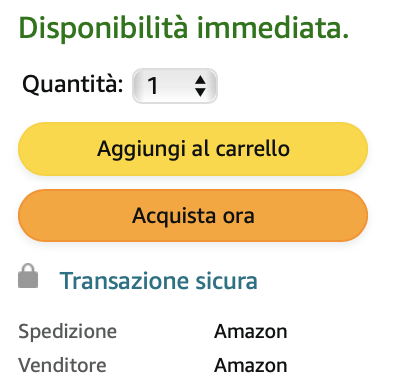
As anticipated, the main difference between Amazon Seller and Vendor is the business model. While the former is somewhat comparable to consignment, where Amazon displays the products while keeping a percentage of the sale, with Vendor the company becomes a direct supplier to Amazon, selling a stock of products to the marketplace, which it will then resell on the platform. It is for this reason that for Vendor products, the text sold and shipped by Amazon appears.
It follows that managing a Vendor account will require a negotiation phase with the marketplace, which will try to obtain the goods at the lowest possible price to increase its own margin.
Even though most companies prefer the Vendor platform, there are also some disadvantages to consider that do not necessarily make it the best choice for everyone:
- No decision-making power over the price, and this can be a problem in the presence of agreements with other retail resellers;
- Amazon can decide to perform a return on the purchased goods and it is, therefore, necessary to work on marketing just like a Vendor;
- Less user-friendly platform.
Furthermore, as mentioned in the introduction, tools reserved solely for Vendors are becoming fewer, as Sellers have access to an increasingly wide range of tools, such as Sponsored Display campaigns, video, or the Brand Analytics tool (provided you are a registered Brand Registry owner).
Subscribe to the YouTube channel to stay updated!
Price control
As mentioned, one of the main disadvantages of the Vendor platform is the absence of control over the retail price. An algorithm determines the optimal selling price based on the average market price, sales history, and other factors. Although this might not seem like a problem at first glance—since the impact seems to be only on Amazon's margins—not all companies can deliberately leave the decision of the selling price to Amazon, perhaps due to commercial agreements made with other distributors.

Furthermore, it is precisely a potential increase in margins that makes greater price flexibility preferable, increasing it if sales results are satisfactory and decreasing it otherwise.
In our experience, it is precisely the lack of control over pricing that makes a Seller account preferable for many companies.
Amastar · Amazon Agency
Discover how we can help you integrate Amazon into your business
Book a free consultation with our team.
Logistics
From a logistics standpoint, Amazon Vendor functions in a way not too dissimilar from Amazon FBA, which we discussed extensively in this article. The only difference, obviously, lies in the fact that with Amazon FBA you can send as many SKUs and units as you prefer to logistics, while with Amazon Vendor you will only ship what has been sold to Amazon.
Even in the case of Amazon FBA, the phrase "Shipped by Amazon" will appear, with the difference that next to the "Sold by" entry, the Seller's name will appear.

Amastar · Amazon Agency
Discover how we can help you integrate Amazon into your business
Book a free consultation with our team.
Conclusion
To conclude, it is not possible to express a clear preference between Amazon Seller and Amazon Vendor. Although the platforms are tending to look more and more alike, there are still some substantial differences that make careful evaluation necessary. To understand what the best solution for your business might be:
Amastar · Amazon Agency
Discover how we can help you integrate Amazon into your business
Book a free consultation with our team.
You might also like
Come ottenere più recensioni su Amazon con Amazon Vine
Scopri come funziona Amazon Vine e le best pratice per sfruttare al meglio il programma
Vendere online: meglio su Amazon o con e-commerce proprietario?
Nel 2025, il commercio elettronico continua a crescere, offrendo opportunità per chiunque voglia avviare un'attività online. Una delle prime decisioni è scegliere tra vendere su una piattaforma consolidata come Amazon o creare un e-commerce proprietario. Entrambe le opzioni hanno vantaggi e sfide da considerare.I vantaggi di vendere su AmazonAmazon rappresenta uno dei marketplace più popolari al mondo. Vendere su questa piattaforma offre:● Visibilità immediata: con milioni di utenti giornalieri,
Perché conviene iniziare a vendere su Amazon Seller Central anche per i Vendor
Sempre più aziende stanno iniziando a vendere tramite su Amazon tramite Sellercentral | Scopri come iniziare o come migrare da Vendor con un'agenzia Amazon parnter